
Keynote speakers and talk details for ISCIT 2026 are listed below. Additional keynote information will be updated as it becomes available.
Overview
- Keynote #1 High Resolution 3D Optical Underwater Imaging with Applications
- Keynote #2 Semantic Communication System for Remote Driving with an Asymmetric Encoder–Decoder Architecture
- Keynote #3 Sparse Feature Pyramid Recovery for Vision Tasks under Adverse Imaging Conditions
- Keynote #4 Exploring Pathways for Building a New Energy System through Coordinated Computing–Power Development
- Keynote #5 AVS Video Coding Standards Recent Developments and Future Trends
Keynote #1 High Resolution 3D Optical Underwater Imaging with Applications
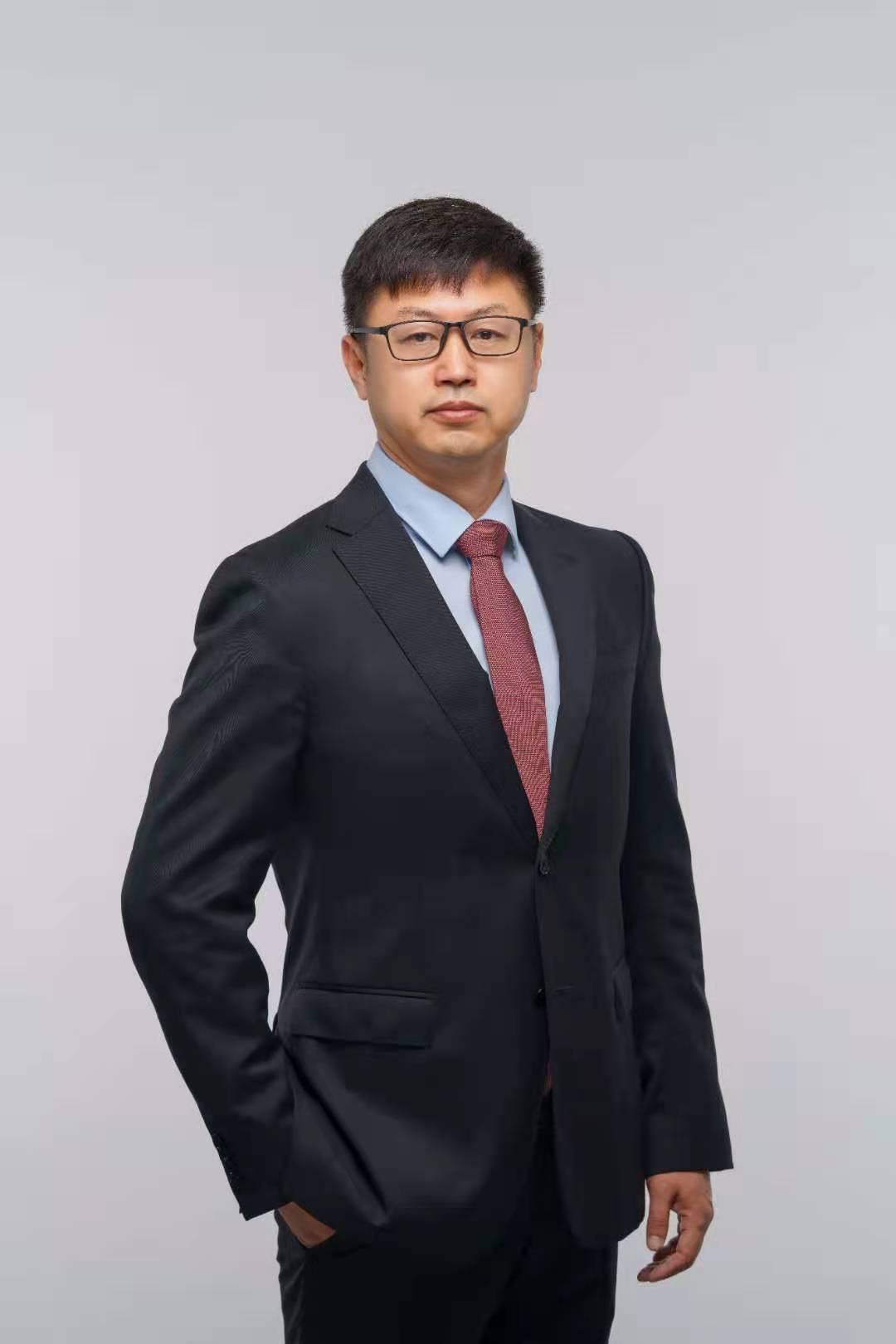
Junyu Dong
Professor, Ocean University of China
Abstract
Owing to the complex and harsh conditions of underwater operating environments, traditional underwater photography cannot realize precise three-dimensional measurements, whereas acoustic imaging fails to acquire high-resolution data as well as surface color information. High-precision underwater optical 3D imaging boasts extensive application prospects, ranging from the inspection and monitoring of marine engineering and other underwater infrastructure, to high-fidelity 3D scanning and measurement of seabed structures such as coral reefs, oyster beds and shell ridges, and further to high-precision 3D mapping of underwater cables.
This report mainly introduces the high-precision 3D imaging equipment and technology developed by our research team. The system achieves millimeter-level measurement accuracy and excels in multiple key performance indicators, including range resolution, lateral resolution and sampling rate. Furthermore, it can be flexibly deployed on various types of underwater vehicles.
Biography
Prof. Junyu Dong received his Ph.D. in November 2003 from Heriot-Watt University, UK. He is a corresponding member of the National Academy of Artificial Intelligence (NAAI), and currently a professor and the Dean of the Faculty of Information Science and Engineering at Ocean University of China. In 2020, he was awarded a Leverhulme Trust Visiting Professorship hosted by the University of Portsmouth.
His research interests include 3D underwater imaging and machine learning with applications in marine science. He has been the principal investigator of more than 10 research projects supported by the Natural Science Foundation of China and the Ministry of Science and Technology. He has published more than 200 major journal and conference papers. Professor Junyu Dong has developed a series of high-resolution underwater 3D imaging systems, which have been deployed to obtain 3D data of seabed topography, corals, underwater power cables, port seabed foundations, and various other underwater structures. He is the founding editor of the Journal of Intelligent Marine Technology and Systems, and also a Chairman of the Qingdao Chapter of the Association for Computing Machinery (ACM).
Keynote #2 Semantic Communication System for Remote Driving with an Asymmetric Encoder–Decoder Architecture
Celimuge Wu
Professor, The University of Electro-Communications, Japan
Abstract
This talk presents a novel low-latency semantic video communication framework tailored for remote driving scenarios. Unlike conventional video transmission approaches, the proposed system adopts an asymmetric encoder–decoder architecture that significantly reduces transmission overhead by conveying only a compact set of semantic features rather than raw video data.
At the receiver, high-quality video is reconstructed using advanced generative AI techniques, enabling both low latency and high visual fidelity. To validate the proposed framework, we design and implement a prototype system that seamlessly integrates semantic feature extraction, efficient transmission, and deep learning–based video reconstruction.
Experimental results demonstrate the effectiveness of the proposed approach in achieving ultra-low latency while maintaining high visual quality, highlighting its strong potential for next-generation intelligent transportation systems.
Biography
Celimuge Wu is a Professor and Director of the Meta-Networking Research Center at The University of Electro-Communications, Japan. His research interests include semantic communications, vehicular networks, edge computing, the Internet of Things (IoT), and AI-driven wireless networking and computing.
He serves as an Associate Editor for IEEE Transactions on Networking, IEEE Transactions on Cognitive Communications and Networking, IEEE Transactions on Network Science and Engineering, and IEEE Transactions on Green Communications and Networking. He is the Vice Chair (Asia Pacific) of the IEEE Technical Committee on Big Data. Professor Wu is a recipient of the 2021 IEEE Communications Society Outstanding Paper Award, the 2021 IEEE Internet of Things Journal Best Paper Award, the 2020 IEEE Computer Society Best Paper Award, and the 2019 IEEE Computer Society Best Paper Award Runner-Up. He is a Distinguished Lecturer of the IEEE Vehicular Technology Society. He is a Foreign Fellow of the Engineering Academy of Japan and a Fellow of the Asia-Pacific Artificial Intelligence Association (AAIA).
Keynote #3 Sparse Feature Pyramid Recovery for Vision Tasks under Adverse Imaging Conditions
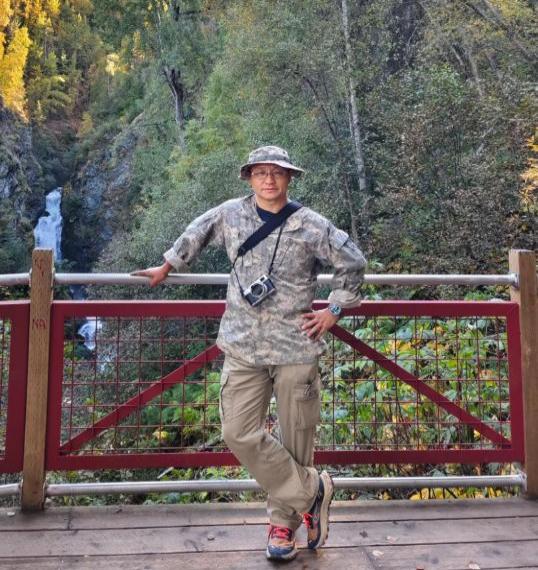
Zhu Li
Professor, University of Missouri, Kansas City
Abstract
Remote sensing and vision problems such as object detection and recognition from various active and passive sensors are of great value to many precision agriculture, defense, and disaster relief use cases. Usually, due to sensor or communication link limitations, the images received are of low resolution and quality, and may contain compression artifacts. To combat this, we developed a new direct vision task feature pyramid recovery method with a plug-and-play framework that does not require retraining of the vision task network.
To achieve low-complexity and high-efficiency feature pyramid recovery, a joint frequency and pixel domain neural learning approach, which we call TSFnet, is introduced. Instead of recovering dense pixels, which is usually much harder, sparse vision task features are easier to recover via a residual learning framework. TSFnet utilizes a dual spatial and frequency branch based tokenization of the input image sensor field, and introduces deep fusion blocks with channel-wise transformers. The {Q, K} dimensions of the channel-wise transformer are carefully managed for deeper networks with a small network size, which allows for a very efficient and effective learning solution.
The approach has had many successes in problems such as SIFT detection from event cameras, joint deblurring and target detection, as well as very low bit rate complex SAR image compression for phase recovery.
Biography
Zhu Li is a professor with the Department of Computer Science & Electrical Engineering, University of Missouri, Kansas City (UMKC), and the director of the NSF I/UCRC Center for Big Learning (CBL) at UMKC. He received his Ph.D. in Electrical & Computer Engineering from Northwestern University in 2004.
He was AFRL summer faculty at the UAV Research Center, U.S. Air Force Academy (USAFA), 2016–2018 and 2020–2024. He was Senior Staff Researcher with Samsung Research America's Multimedia Standards Research Lab in Richardson, TX, 2012–2015, Senior Staff Researcher with FutureWei (Huawei) Technology's Media Lab in Bridgewater, NJ, 2010–2012, Assistant Professor with the Department of Computing, The Hong Kong Polytechnic University, Hong Kong, China from 2008 to 2010, and a Principal Staff Research Engineer with the Multimedia Research Lab (MRL), Motorola Labs, from 2000 to 2008.
His research interests include point cloud and light field compression, graph signal processing and deep learning in next-generation visual compression, remote sensing, image processing and understanding. He has 70+ issued or pending patents and 200+ publications in book chapters, journals, and conferences in these areas. He is an IEEE Senior Member, Associate Editor-in-Chief (2020–2023) and Senior Area Editor (2024–) for IEEE Transactions on Circuits and Systems for Video Technology, Associate Editor for IEEE Transactions on Image Processing (2020–), IEEE Transactions on Multimedia (2015–2018), and IEEE Transactions on Circuits and Systems for Video Technology (2016–2019). His team won the AFRL-sponsored Perception Beyond Visual Spectrum (PBVS) grand challenge at CVPR 2023 on SAR image recognition, and thermal image super-resolution in 2024. He also received the Best Paper Award at IEEE International Conference on Multimedia & Expo (ICME), Toronto, 2006, and IEEE International Conference on Image Processing (ICIP), San Antonio, 2007.
Keynote #4 Exploring Pathways for Building a New Energy System through Coordinated Computing–Power Development
Chenghui Zhang
Vice Chair of the Academic Committee of Shandong University, Dean of the School of Control Science and Engineering, Shandong University
Abstract
With the rapid expansion of computing infrastructure and the accelerating transition toward green and low-carbon energy systems, computing–power coordination has become an important approach to enhancing digital competitiveness and improving the resilience of energy systems. However, it is not a simple combination of computing and power resources, but a complex system involving deep interactions across multiple physical, control, and operational layers.
Its development faces three major challenges: unified modeling of computing loads and power systems, stable control under rapid and large-scale load fluctuations, and coordinated scheduling among multiple stakeholders with different objectives. In particular, hybrid AC–DC architectures, the dynamic characteristics of training, fine-tuning, and inference workloads, negative impedance effects, strict latency requirements, and long-distance transmission losses further increase system complexity.
This report examines the underlying causes of these challenges and discusses potential modeling, control, and scheduling solutions to support the development of next-generation energy systems.
Biography
Prof. Chenghui Zhang is Vice Chair of the Academic Committee of Shandong University, Dean of the School of Control Science and Engineering, and Director of the National Engineering Research Center for New Energy Control. He is also a Chair Professor, an IEEE Fellow, Vice President and Fellow of the Chinese Association of Automation, and a Fellow of the China Power Supply Society. He has been selected as a Distinguished Professor under the Chang Jiang Scholars Program of the Ministry of Education, a National Candidate of the Ten Thousand Talents Program, a National Teaching Master, and a member of the National Hundred, Thousand and Ten Thousand Talents Project.
He serves as Chair of the New Energy Systems Control Committee of the Chinese Association of Automation, a member of the 8th Discipline Evaluation Group of the Academic Degrees Committee of the State Council (Control Group), and a member of the Information Science Division of the Science and Technology Committee of the Ministry of Education. He has led his team to be selected into the National Natural Science Foundation of China Innovative Research Group on “Optimized Control of New Energy Power Generation Systems” and the National Higher Education Huang Danian-Style Faculty Team.
Prof. Zhang has been awarded five national scientific and technological or teaching achievement prizes as the first contributor, including three Second Prizes of the National Science and Technology Progress Award and two Second Prizes of the National Teaching Achievement Award. He has also received the Ho Leung Ho Lee Foundation Prize for Scientific and Technological Progress, the Guanghua Engineering Science and Technology Award of the Chinese Academy of Engineering, the National Innovation Excellence Award, the Shandong Provincial Highest Science and Technology Award, the Special Prize for Excellent Teachers of the Baosteel Education Foundation, the National Advanced Worker title, the National Advanced Individual for Returned Overseas Chinese, and the Qilu Most Beautiful Scientist and Technologist title.
Keynote #5 AVS Video Coding Standards Recent Developments and Future Trends
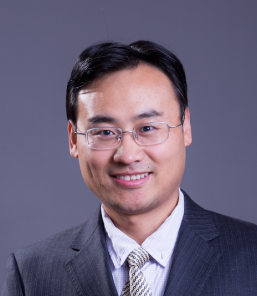
Siwei Ma
Professor, Peking University
Abstract
This talk will introduce the roadmap and core technologies of China’s AVS next-generation video coding standards (NGVC, AVS4), against the backdrop of surging demand for immersive media, AIGC video, and multi-sensory metaverse applications. Massive UHD, panoramic, and volumetric visual data bring severe bandwidth pressure, driving the integration of traditional hybrid coding with deep learning, multimodal understanding, and generative AI.
The talk will first review the evolution of the AVS series from AVS1 to AVS3, and introduce two landmark neural coding standards: IEEE 1857.11 for neural image compression and the AVS-EEM end-to-end video coding framework. Furthermore, this work proposes the AVS-GenAI generative video coding paradigm built on diffusion, DiT, and VAE architectures. It leverages multimodal semantic priors extracted by video understanding models to reconstruct high-fidelity frames at ultra-low bitrates, supporting extreme compression ratios over 6700×.
Cross-modal coding is also explored, utilizing text, depth, and segmentation cues to further reduce transmission overhead. In conclusion, the upcoming AVS4 standard centers on integrated multimodal coding, lightweight neural prediction, and generative reconstruction, addressing bottlenecks in immersive and AIGC media and leading global competition in next-generation video representation.
Biography
Prof. Siwei Ma is a Professor at the Institute of Digital Media, School of Electronics Engineering and Computer Science, Peking University. He is an IEEE Fellow. He received the B.S. degree from Shandong Normal University, Jinan, China, in 1999, and the Ph.D. degree in computer science from the Institute of Computing Technology, Chinese Academy of Sciences, Beijing, China, in 2005. He held a postdoctoral position with the University of Southern California, Los Angeles, CA, USA, from 2005 to 2007. He is currently a Professor at Peking University.
His research interests include image and video coding, video processing, video streaming, and transmission. He has authored more than 300 technical articles in refereed journals and proceedings in image and video coding, video processing, video streaming, and transmission. He has served/serves as an Associate Editor for IEEE Transactions on Image Processing, IEEE Transactions on Circuits and Systems for Video Technology, and the Journal of Visual Communication and Image Representation.